Your Agronomists Are Already Collecting This Data — You're Just Not Capturing It
Overview
Most row crop farmers already generate detailed digital agriculture data through yield monitors, soil tests, remote sensing, and variable rate technology prescriptions, usually built by their agronomist during a normal field visit. The problem isn't a lack of data collection. It's that this data lives scattered across machinery displays, retailer portals, and one-off files instead of one farmer-owned record. Capturing what already exists, rather than creating new work, is what turns scattered precision ag data into something usable for benchmarking, on-farm trials, sustainability reporting, and compliance.
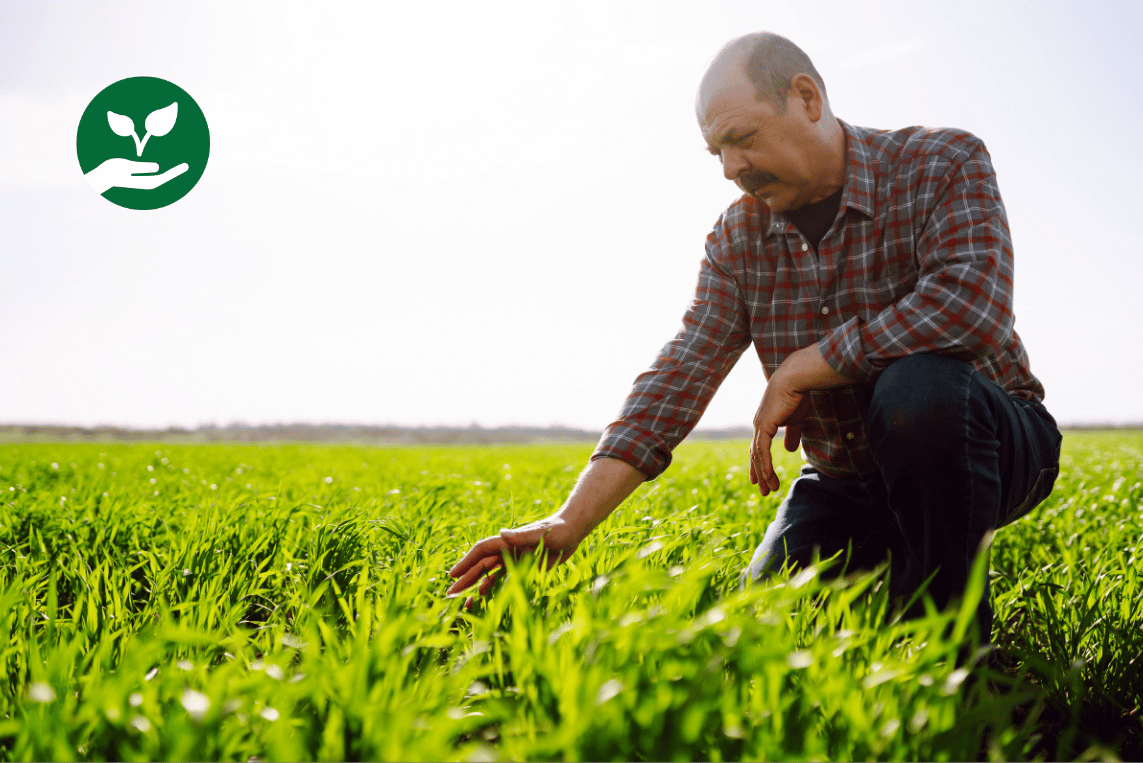
An agronomist pulls up to a field, opens a tablet, and checks last year's yield map before walking the rows. She already has the soil test results from March. She's building a variable rate nitrogen prescription based on the field variability she can see right there on the screen, zone by zone. By the time she leaves, she has produced more usable data about that field than most farmers realize exists.
None of that data disappears. But almost none of it ends up anywhere a farmer, a co-op, or a certifier could actually pull it back up next year. It sits in a yield monitor's memory card, a retailer's app, or a prescription file emailed once and never looked at again. The work of collecting it already happened. The work of capturing it never did.
That gap, not a lack of data, is the real problem in agriculture right now.
The data is already there
Modern farming systems generate an enormous amount of digital agriculture data without anyone trying very hard. Yield monitors on the combine record yield estimates in real time, cell by cell, across every acre harvested. Grain yield monitors paired with GPS turn that into yield maps a farmer can look at the same afternoon. Soil tests already tell an agronomist what a field needs before a single input goes down. Remote sensing and satellite imagery flag stressed patches of a field before they're visible from the truck. Variable rate technology, or VRT, prescriptions translate all of that into zone-by-zone application maps for seed, nitrogen, and crop protection.
Corn and soybean acres in particular have carried this kind of precision farming for years. Yield monitors, yield maps, and variable rate application are common enough on large operations that most agronomists barely think of them as separate tools anymore, they're just part of how the work gets done. Even on crops like sorghum, where adoption has lagged, the same yield monitor and remote sensing data is often being collected somewhere, even if it's used less.
The point isn't that farmers need more data collection. Most fields already have field boundaries mapped, geo-referenced data points from soil sampling, and a season or two of yield maps sitting somewhere. Plant nutrition recommendations, water quality notes from a wet spring, cover crop termination dates, most of it exists in some form. The point is that almost none of it is captured anywhere durable.
Some of this data doesn't even require a human to generate it anymore. Satellite imagery updates weekly on most major platforms now, and a growing number of retailers are layering artificial intelligence on top of remote sensing feeds to flag field variability before an agronomist ever sets foot in the row. That's more raw material, not less of a reason to capture it. A flag from a satellite pass is only useful if it gets tied to a field's actual record instead of disappearing from an app after the growing season ends.
Why the gap actually costs something
Here's where it gets expensive, not in dollars spent, but in value left on the table. A cooperative trying to document carbon intensity for a 45Z premium needs the same field-level practice history an agronomist already has on file somewhere. A farmer applying for a conservation program needs to show cover crops and nutrient management history that a retailer's VRT prescription already implies. A university running an on-farm trial needs yield data a grain yield monitor already captured last fall. A farmer trying to benchmark this year's crop performance against a neighbor's needs yield maps that already exist, just not in a form anyone can compare.
Each of those asks ends up feeling like a brand new task, because the data was never captured as a reusable record in the first place. The agronomist gets asked the same question three times a season. The farmer digs through old emails looking for a soil test from two years ago. Nobody is short on data collection. Everyone is short on a place to put it.
Benchmarking suffers the same way. A farmer who wants to compare this year's crop performance against last year's, or against a neighbor running similar farming systems, needs consistent yield estimates and practice data sitting side by side. Right now that comparison usually means pulling files from three different places and hoping the formats match, when the underlying yield monitor and soil test data were never that different to begin with.
What capturing it actually looks like
Capturing this data doesn't require a farmer to adopt new artificial intelligence software or start a second job as a data analyst. It requires the visit that's already happening, the same scouting trip, the same VRT prescription, the same yield map pull, to end with a record instead of a one-off file.
An agronomist writing a variable rate nitrogen prescription is already looking at field variability data. Logging that decision once, tied to the field and the season, means it's there the next time someone asks about nutrient management history, whether that's a lender, a certifier, or a biofuel buyer chasing a lower carbon score. A yield monitor already produces yield estimates at harvest. Saving that as part of a farmer's own record, rather than leaving it on a memory card, means benchmarking against past seasons or nearby fields becomes a five-minute lookup instead of a data hunt.
Traceability is the word auditors and certifiers use for this, but for a farmer or agronomist it just means not having to reconstruct the same practice history from memory every time a new program, buyer, or inspector comes asking.
The same captured record pays off in more places than most farmers expect. Field boundaries and georeferenced data points from a soil test become the backbone of an on-farm trial with a university or seed company, since the plot data already lines up with real field history instead of a fresh survey. A variable rate application map for cover crops or nitrogen becomes the practice history a sustainability report or a water quality program asks for. None of it requires a second visit. It just requires the first visit to end somewhere other than a memory card.
The real opportunity here
Precision agriculture already solved the hard problem. Farmers, agronomists, and retailers are sitting on more usable field data than almost any other industry captures about its own supply chain, yield maps, soil tests, remote sensing, VRT prescriptions, water quality indicators from cover crop and nutrient management practices. Two decades of investment in precision farming got the data collection part right. What's missing is the last, simplest step: putting it somewhere it can be found again.
An agronomist who already has this data on file is the most efficient person to capture it once, at the same visit, instead of a farmer rebuilding it from scratch for every certifier, lender, or sustainability report that comes calling. That single habit, capturing what's already being collected, is worth more to most farms right now than any new sensor or subscription.
You already have the data. The only thing missing is somewhere to put it.
Learn more with One Farm Record, Six Use Cases: A Guide for Agronomists.
Ready to try FarmRaise for free?
Start your free 7-day trial of FarmRaise Premium today.
Ready to try FarmRaise for free?
Start your free 7-day trial of FarmRaise Premium today.
Ready to try FarmRaise for free?
Start your free 7-day trial of FarmRaise Premium today.
See how how easy FarmRaise makes Taxes & Schedule F!
Ready to try FarmRaise for free?
Start your free 7-day trial of FarmRaise Premium today.
Ready to streamline your program management?
See how FarmRaise can simplify farmer-facing program management for your organization.
Ready to simplify payroll on your farm?
See if FarmRaise Payroll is right for you!
FAQs
What kind of data are agronomists already collecting on most farms?
Most agronomists already work with yield monitor data, yield maps, soil tests, remote sensing and satellite imagery, and variable rate technology prescriptions built from field variability data, usually as a normal part of a scouting visit or input recommendation.
If farmers already have all this data, why does it feel unavailable?
Because it's rarely captured as one durable, farmer-owned record. Yield monitor files, soil test results, and VRT prescriptions typically live in separate machinery displays, retailer apps, or one-off documents instead of a single place a farmer can look up later.
How does capturing this data help with benchmarking or on-farm trials?
On-farm trials and crop performance benchmarking both need consistent, comparable yield estimates and practice history across seasons or fields. When that data is captured once instead of recreated for each request, benchmarking becomes a lookup instead of a fresh data collection project.
Does capturing this data require new technology or artificial intelligence tools?
No. The data collection already happens through existing digital agriculture tools like yield monitors and remote sensing. Capturing it well is mostly a matter of saving what's already generated as a structured, farmer-owned record instead of a one-time file.
Why does this matter for sustainability or water quality reporting?
Sustainability reports and water quality programs typically ask for the same practice history an agronomist's VRT prescriptions and cover crop records already imply. If that data is captured at the time it's generated, it doesn't need to be rebuilt from memory when a report or program comes asking.
What's the simplest way to start capturing this data?
Start with the visit that's already happening. An agronomist writing a variable rate nitrogen prescription or pulling a yield map is already looking at the data. Saving that as part of a farmer's own ongoing record, rather than a one-off file, is the entire first step.