BeeSmart Bookkeeping: Tips for Beginning Beekeepers Using FarmRaise
Overview
Starting a beekeeping business requires more than healthy hives and quality honey. It demands careful financial management from day one. This guide walks beginning and experienced beekeepers through the essentials of farm bookkeeping, including expense tracking, inventory management, invoicing for bee products, and budgeting for startup costs, using FarmRaise Tracks as the organizational backbone. Beekeepers operating as agricultural producers may also qualify for USDA disaster assistance through programs like the Emergency Assistance for Livestock, Honeybees, and Farm-Raised Fish Program (ELAP), which covers honeybee colony losses caused by qualifying weather events and disease. FarmRaise's FSA Educational Hub is a plain-language resource that helps beekeepers understand which FSA programs apply to their operation, how to document losses, and how to stay prepared for application deadlines. Whether you're managing a backyard apiary or scaling into a full bee farm, combining strong bookkeeping habits with awareness of available USDA programs gives your beekeeping business a more resilient financial foundation.
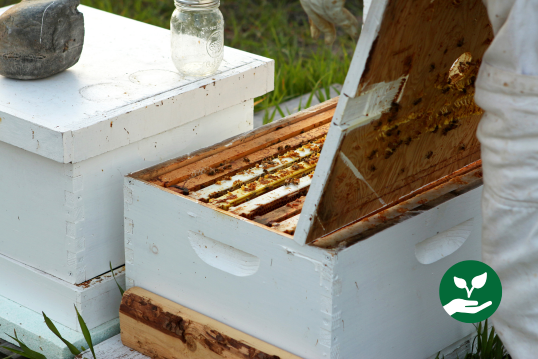
Starting a beekeeping business is sweet in more ways than one. Whether you're looking to turn your backyard beehive into a small business or just exploring beekeeping for beginners, FarmRaise's farm accounting software can help keep your books just as tidy as your apiary. Bookkeeping may not be the first thing new beekeepers think about, but it's just as important as choosing the right beekeeping supplies or inspecting your queen bee.
In this guide, we’ll walk you through how to start beekeeping with a solid plan for bookkeeping. You’ll learn how FarmRaise helps with inventory management, expense tracking, invoicing, and much more to help you stay organized from your first nuc to your honey harvest.
Why Bookkeeping Matters in Beekeeping
Bookkeeping is the backbone of any small business. For beginner beekeepers, especially in the first year, tracking expenses and income helps make sure your beekeeping startup is sustainable. A lot of people dive into backyard beekeeping thinking it’s simple, but between the supers, nucs, queen bee replacements, and beekeeping equipment, costs add up fast.
Using accounting software like FarmRaise gives you a place to record all of your purchases, from hive tools and beeswax molds to your first package of bees. Over time, you’ll build a clear financial picture of your beekeeping business and be better prepared for tax time or applying for farm grants.
Tracking Beekeeping Expenses with FarmRaise
Every time you buy new beekeeping equipment or refill your beekeeping supplies, FarmRaise Tracks lets you record those transactions. You can categorize expenses like:
- Beehive components (supers, frames, foundation)
- Beekeeping classes or workshops
- Safety gear and hive tools
- Varroa mite treatments or other pest management
- Feed supplements during a dearth (periods of low nectar flow)
- Marketing costs for your bee products
Pro tip: Label these by type and date so you can compare seasonal trends in honey production and expenses. Keeping bees can be costly up front, but good bookkeeping helps you see which costs pay off.
Setting Up Your Apiary Inventory
Whether you’re managing 3 or 30 bee colonies, inventory management is key to successful beekeeping. FarmRaise Tracks makes it easy to list what you have on hand:
- Number of active hives and their condition
- Beekeeping supplies on hand (feed, tools, gear)
- Equipment per hive (like supers or extra frames)
- Stock of bee products like beeswax candles or bottled honey
Having this all in one place helps when you're doing hive inspections or getting ready for your next honey harvest. It also helps you budget for what you need next season.
Invoicing and Selling Bee Products
If your bee farm is growing into a business, FarmRaise helps you send invoices to customers who buy your honey, beeswax, or even a nuc or package of bees. You can create professional invoices and track payments received.
Many local beekeepers start selling directly at farmers markets, through CSAs, or online. With FarmRaise, you’ll know exactly how much you're earning and spending, making it easier to price your bee products profitably.
Budgeting for Your First Year
Your first year as a beekeeper comes with a lot of upfront costs. Here's a sample list of common startup purchases for new beekeepers:
- Langstroth hive kits (including brood boxes and supers)
- Package of bees or a nuc
- Protective suit, gloves, and veil
- Hive tool and smoker
- Feeders and sugar syrup
- Beekeeping books or beekeeping classes
Using FarmRaise, you can enter each item and categorize it, helping you understand the true cost of keeping bees. You’ll also have a record ready for business deductions come tax season.
Joining the Beekeeping Community
Beekeeping for beginners is more fun when you’re part of the larger beekeeping community. Joining a local beekeeping association or participating in online forums can help you learn the ropes from experienced beekeepers. You’ll pick up tips on how to manage varroa mites, when to add supers, and how to prep for pollination season.
Some associations even offer group discounts on beekeeping equipment or access to certified beekeeping classes. Keep track of any fees or dues using FarmRaise so you can claim them as business expenses.
Performing Hive Inspections
Hive inspections are a critical part of keeping bees healthy. You should inspect every beehive every 7–10 days during the active season. As you do, keep notes on:
- Presence and health of the queen bee
- Brood pattern and number of worker bees
- Signs of pests like varroa mites or wax moths
- Storage of honey and pollen
These notes can be stored in FarmRaise Inventory as part of your production and health tracking. If you notice that honey production is dropping, your inspection notes and expense tracking can help identify why.
Planning for Pollination and Dearth
Pollination is one of the most valuable services that honey bees provide. If you offer pollination services to nearby farms, track mileage, equipment, and labor costs in FarmRaise. That way, your pricing reflects your true expenses.
During dearths, when nectar sources are scarce, you might need to supplement feed. This is another expense you can log in FarmRaise to compare costs year to year.
Selling More Than Honey
A lot of people think of honey as the main product, but bee farms can also sell:
- Beeswax and candles
- Propolis and pollen
- Nucs and queen bees
- Pollination services
Each of these has its own pricing, seasonality, and inventory needs. FarmRaise lets you separate income by Schedule F category and products, helping you see what part of your beekeeping business is most profitable.
Safety, Regulations, and Disclaimers
As your apiary grows, keep track of regulatory costs and required documentation. This might include:
- Organic certification
- Business licenses
- Beekeeping association membership
- Insurance for your bee colonies or property
And of course, always add a disclaimer when giving bee-related advice to customers, especially about allergic reactions or bee sting safety.
Tips from Experienced Beekeepers
Even experienced beekeepers learn something new every season.
Here are a few of their top tips:
- Start with two hives so you can compare and troubleshoot.
- Take notes after each hive inspection.
- Track every purchase. You’ll thank yourself later.
- Don’t ignore signs of pests like varroa mites.
- Join forums and local groups early.
Use FarmRaise to stay on top of it all, from beeswax orders to your latest honey harvest.
Be Smart from the Start
Beekeeping is a beautiful blend of nature and business. Whether you're drawn to the hum of the hive or the sweetness of honey, FarmRaise helps you manage the financial side so you can focus on your bees.
From your first package of bees to your hundredth jar of honey, smart bookkeeping ensures your beekeeping business can grow sustainably. Don’t wait until you’re buried in receipts. Let FarmRaise help you build a buzzing, profitable apiary from day one.
For more on how to start beekeeping and bookkeeping the right way, check out our beekeeping resources or join your local beekeeping association today.
Ready to get started with FarmRaise Tracks to get your finances on track? Use code IT3H12B for 20% off, or click here to get started.
Ready to try FarmRaise for free?
Start your free 7-day trial of FarmRaise Premium today.
Ready to try FarmRaise for free?
Start your free 7-day trial of FarmRaise Premium today.
Ready to try FarmRaise for free?
Start your free 7-day trial of FarmRaise Premium today.
See how how easy FarmRaise makes Taxes & Schedule F!
Ready to try FarmRaise for free?
Start your free 7-day trial of FarmRaise Premium today.
Ready to streamline your program management?
See how FarmRaise can simplify farmer-facing program management for your organization.
Ready to simplify payroll on your farm?
See if FarmRaise Payroll is right for you!
FAQs
Why is bookkeeping important for beginner beekeepers starting a business?
Bookkeeping is the financial foundation of any sustainable beekeeping operation, and it matters from the very first purchase. When you're just starting out, costs like hive kits, protective gear, a package of bees or a nucleus colony, feeders, and beekeeping classes can add up quickly, and without a system in place it becomes difficult to understand whether your operation is profitable. Recording every transaction in farm accounting software like FarmRaise Tracks gives you a clear picture of your actual startup costs, helps you price your bee products accurately, and prepares you for tax season by keeping business expenses organized and categorized. Good records also strengthen any application for farm grants or USDA assistance programs, since agencies like the FSA want to see documentation of your operation's history and expenses. Beekeepers who track their financials from the start are also better positioned to identify which parts of the business are generating returns and which costs are outpacing revenue. Starting with clean books is far easier than reconstructing a year's worth of receipts later, and FarmRaise Tracks is designed to make that process straightforward for agricultural producers at any scale.
How should beekeepers track and categorize their expenses using FarmRaise Tracks?
FarmRaise Tracks allows beekeepers to record and categorize purchases as they occur, which creates an accurate running ledger of all operational costs throughout the season. Expense categories for a beekeeping business typically include hive components like supers, frames, and foundation; safety gear and hive tools; varroa mite treatments and other pest management products; feed supplements used during periods of low nectar flow; beekeeping classes or association dues; and marketing costs for honey and other bee products. Labeling each transaction by type and date makes it possible to compare seasonal spending patterns across years and identify where costs are concentrated. This level of detail also matters for Schedule F tax preparation, since many beekeeping expenses qualify as farm business deductions. When losses occur due to weather events or disease, having thorough expense records also supports claims under USDA disaster programs like ELAP, which covers honeybee colony losses not addressed by other FSA assistance programs. FarmRaise's FSA Educational Hub can help beekeepers understand how ELAP documentation requirements align with the kind of records they should already be keeping in FarmRaise Tracks.
What does good inventory management look like for a beekeeping operation?
Inventory management for a beekeeping operation means maintaining an organized, up-to-date record of everything from active hive counts and colony health status to supplies on hand and finished bee products ready for sale. FarmRaise Tracks lets beekeepers log the number of active hives and their condition, track beekeeping supplies like feed, tools, and protective gear, record equipment assigned to each hive such as supers and additional frames, and maintain a running inventory of products like bottled honey, beeswax candles, and propolis. Keeping this information centralized makes hive inspections more efficient and seasonal planning more accurate, since you can see at a glance what you have on hand and what needs to be restocked before the next honey harvest. Inventory records also serve a practical role if you need to file a loss claim with the FSA, since ELAP and other disaster assistance programs require producers to document the number of colonies affected, the cause of loss, and normal mortality baselines. Detailed inventory records maintained in FarmRaise Tracks can support that documentation process and reduce delays in the claims process. FarmRaise's FSA Educational Hub provides additional guidance on what records FSA typically requires for honeybee loss claims.
How can beekeepers sell honey and other bee products and manage invoicing professionally?
As a beekeeping business grows beyond the backyard, managing sales and invoicing becomes just as important as hive management. FarmRaise Tracks allows beekeepers to create professional invoices for customers purchasing honey, beeswax, propolis, pollen, nucleus colonies, or queen bees, and to track payments received against those invoices. Many beekeepers sell through farmers markets, community-supported agriculture arrangements, or direct online channels, and having a clear record of income by product type makes it much easier to evaluate which offerings are most profitable and how to price them in future seasons. Separating income by product category within FarmRaise also maps cleanly to Schedule F reporting, where different types of farm income may need to be recorded distinctly. If your beekeeping operation provides pollination services to neighboring farms, those invoices can be tracked separately as a distinct revenue stream, and related costs like mileage, equipment transport, and labor can be logged as offsetting expenses. Accurate sales records complement any financial documentation you might need when applying for USDA programs, loans, or farm grants, where lenders and agencies often want to see a verified record of your operation's income history.
What USDA programs are available to beekeepers who experience colony losses or disaster-related damage?
Beekeepers are recognized as agricultural producers under USDA programs, which means they may qualify for several forms of disaster assistance when colony losses or related damage occurs. The most directly relevant program is the Emergency Assistance for Livestock, Honeybees, and Farm-Raised Fish Program, known as ELAP, which is administered by the Farm Service Agency and covers honeybee colony losses caused by qualifying adverse weather events, colony collapse disorder, and other eligible causes not covered by standard crop insurance or other FSA livestock programs. ELAP can provide payments for both colony losses and the cost of feed purchased for surviving colonies during a disaster period, making it one of the more comprehensive safety net tools available to commercial and small-scale beekeepers alike. To access ELAP benefits, beekeepers must notify their local FSA office within 30 calendar days of when the loss is first discovered and provide documentation including colony counts, evidence of the cause of loss, and normal mortality records. Maintaining detailed inventory and expense records in FarmRaise Tracks positions beekeepers to meet those documentation requirements without scrambling to reconstruct records after a loss event. FarmRaise's FSA Educational Hub walks producers through the ELAP application process and other FSA programs in plain language, making it a practical starting point for any beekeeper looking to understand their options before a loss occurs.
How should beekeepers plan financially for their first year, including startup costs and seasonal variability?
The first year of beekeeping comes with substantial upfront investment before any honey is harvested or revenue is generated, and financial planning from the beginning helps new beekeepers avoid cash flow problems later in the season. Common startup expenses include Langstroth hive kits with brood boxes and supers, a package of bees or a nucleus colony, a protective suit, gloves, and veil, a hive tool and smoker, feeders and sugar syrup for the establishment period, and beekeeping books or classes to build foundational knowledge. Entering each of these purchases into FarmRaise Tracks as they occur gives you an accurate picture of your true cost of entry and a record that supports business deductions at tax time. Beyond startup costs, beekeeping has seasonal financial rhythms: expenses for feed tend to spike during dearths when nectar is scarce, varroa mite treatments are concentrated in certain times of year, and income from honey sales is typically concentrated around harvest periods. FarmRaise Tracks helps you map those seasonal patterns over time so you can budget more accurately in subsequent years. If a significant loss event affects your colonies during that first year, FarmRaise's FSA Educational Hub is a resource for understanding whether ELAP or other FSA disaster assistance programs could provide partial relief while you rebuild.