Agricultural Cooperatives Are Already a Social Network
Overview
Agricultural cooperatives function as social networks in the literal, research-backed sense of the term, with members connected by strong ties of trust and information exchange, and staff or leaders often acting as bridges between isolated farmers and wider markets. The Capper-Volstead Act formalized this network into real bargaining power almost a century ago, letting farmer cooperatives negotiate commodity prices and market access collectively. What most cooperatives haven't formalized yet is the data moving through that same trusted network, which is where documenting member practices for programs like 45Z, organic certification, or sustainability reporting comes in.
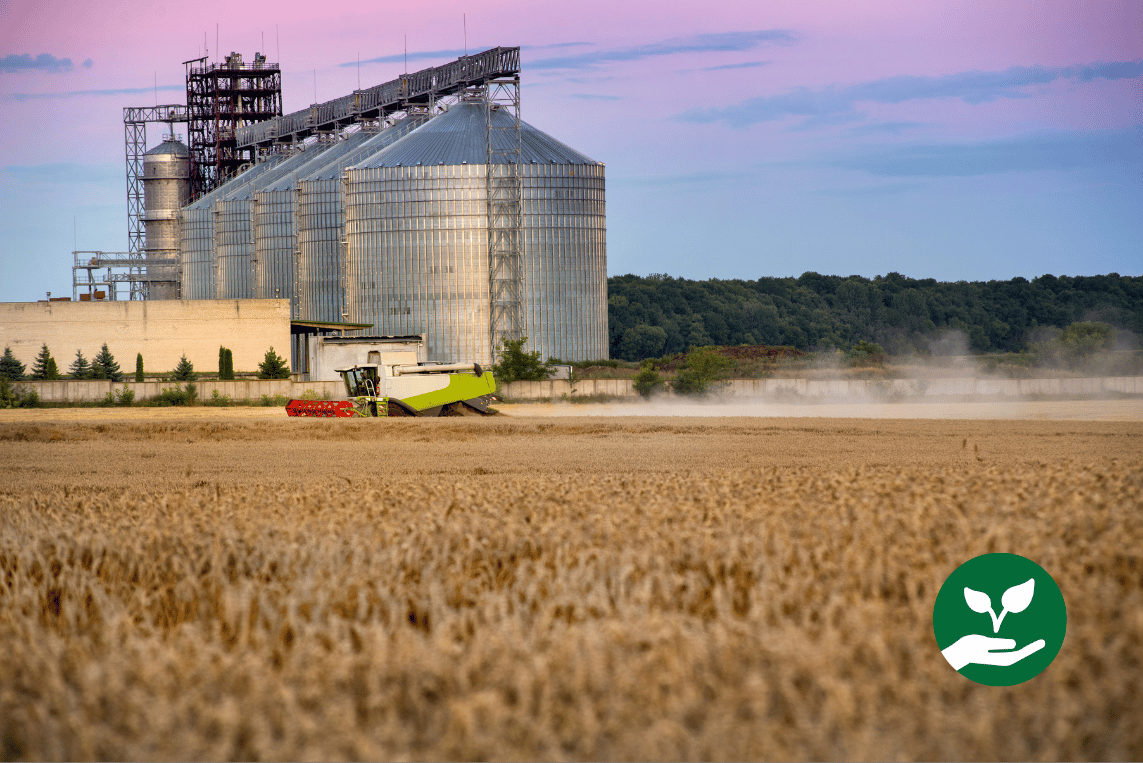
Walk into most co-op elevators on a Tuesday morning and you'll find the same thing happening that's been happening for a hundred years. A few farmers leaning on a counter, trading notes on who's planting what, whose fields flooded, and what the local agronomist thinks about this year's nitrogen prices. Nobody calls it networking. It's just the co-op.
But that counter conversation is a social network in the technical sense, and researchers have actually gone out and measured it. A 2024 study of a farmer cooperative in Shandong Province, China, used formal social network analysis, mapping farmers as nodes and their relationships as ties, and ran the data through UCINET, the software researchers use to calculate centrality measures like degree, closeness, and betweenness. The point wasn't to prove cooperatives are social, everyone already knew that. It was to show that the social structure has a measurable shape, with some members acting as hubs and others as bridges connecting isolated farmers to the wider group.
Researchers didn't just run numbers from a spreadsheet to get there. Social network analysis, or SNA, of this kind usually pairs participant observation, actually spending time at the cooperative, watching who talks to whom, who asks whom for advice, with the formal centrality measures calculated afterward. That combination is what let researchers say with confidence that some members function as hubs everyone routes through, while others serve a bridging role linking smaller, more isolated groups of farmers back into the main network.
That research matters for a simple reason: agricultural cooperatives were doing the work of a social network long before anyone had a name for it, and long before social media gave the idea a platform.
Strong ties, long before the internet
Social network researchers draw a distinction between strong ties and weak ties. Strong ties are the relationships built on repeated contact and trust, the same input rep you've bought seed from for fifteen years, the same neighbor whose combine you borrow. Research on cooperative networks consistently finds that strong ties are what let members exchange information quickly, build trust, and hold each other to shared norms, all of which makes people more willing to cooperate in the first place.
Rural communities have relied on exactly this kind of strong-tie network for generations, partly because farming is geographically isolating in a way most jobs aren't. A farmer cooperative isn't just a grain buyer. It's often the one place a farmer reliably runs into other farmers, a local agronomist, and a lender all in the same week. Researchers studying these networks also look for bridging, the role a person or organization plays connecting two otherwise separate groups. A cooperative's field staff frequently play exactly that bridging role, connecting individual farmers to university trial data, state conservation programs, and buyers they'd otherwise have no direct line to.
The network with legal teeth
What separates a farmer cooperative from an informal friend group is that this network eventually got legal standing. The Capper-Volstead Act, passed in 1922, gave agricultural cooperatives a narrow exemption from antitrust law so that farmers could act collectively in marketing and pricing their products without being treated as an illegal cartel. In practice, that turned an informal social network of neighbors into a body with real bargaining power.
That bargaining power still matters. A single farmer negotiating commodity prices alone has very little leverage. A cooperative negotiating on behalf of hundreds of members, achieving economies of scale on inputs, storage, and transportation, has considerably more. The same network effect shows up in market access too: a cooperative can open doors to buyers, certifiers, and programs that would take an individual farmer years to reach alone.
This is also where rural development and food security enter the picture. Cooperatives have historically been a primary vehicle for capacity building in farming communities, running training programs, offering technical assistance, and helping members adopt agroecological practices and sustainable farming practices at a pace no single extension agent could manage alone. In much of the developing world, the same pattern holds: farmer cooperatives are still the fastest way to get a training program, a new seed variety, or better market access to a rural community that a government agency or company could never reach household by household. None of that happens without the underlying social network already being intact.
It's worth remembering how directly this ties back to the agricultural industry's basic economics. A cooperative that can guarantee volume and consistency to a buyer is worth more to that buyer than the same bushels arriving from a hundred unconnected sellers. That's the practical payoff of the social network showing up as leverage at the negotiating table, not just goodwill at the counter.
What this network still isn't capturing
Here's the gap. A cooperative's social network is excellent at moving trust, gossip, and general know-how. It has never been particularly good at moving structured data. The same strong ties that let a farmer trust an agronomist's fertilizer recommendation don't automatically produce a written, verifiable record of what practice was actually used on which field.
That gap didn't matter much when the only thing riding on a handshake was a grain contract. It matters more now that programs tied to carbon intensity, organic certification, and conservation cost-share all depend on documented, third-party-verifiable practice data, not just a strong tie and a good relationship. A cooperative's social network already contains almost everything needed to build that record. It's just never been asked to capture it in a form anyone outside the network can use.
Formalizing the network you already have
This is less a call to build something new and more a call to notice what's already there. The agricultural industry didn't need social media to build community, cooperatives had already built dense, trust-based networks decades before Facebook existed. What's changed is that the value flowing through that network now includes things like verified carbon intensity data and conservation practice history, not just prices and planting advice.
A cooperative that treats its existing network, the agronomists, the grain desk, the field staff who already know which members are doing what, as the foundation for a documented, farmer-owned data record isn't adding new work. It's capturing what the network was already producing. The strong ties are already there. The bridging roles are already staffed. The only piece missing is a place for all of that information to land once, instead of evaporating after the conversation at the counter ends.
Cooperatives didn't need social network theory to become social networks. They've been one all along. The opportunity now is making sure the data moving through that network is as durable as the trust that built it.
Think about how much of a cooperative's actual value already travels through informal channels. A grain merchandiser hears from three different farmers that a certain field yielded better under a new cover crop mix, long before any formal report gets written. An agronomist mentions to the board that half the membership is already doing something that would qualify for a conservation program. That's a social network doing exactly what social networks do best, moving information fast, informally, and through people who trust each other. Capturing it doesn't mean replacing that flow of trust with a form. It means giving the network a place to put down what it already knows, so the next farmer, buyer, or program that comes asking doesn't have to start the conversation from zero.
Dive in to learn more how the Farm Data Passport can help your cooperative.
Ready to try FarmRaise for free?
Start your free 7-day trial of FarmRaise Premium today.
Ready to try FarmRaise for free?
Start your free 7-day trial of FarmRaise Premium today.
Ready to try FarmRaise for free?
Start your free 7-day trial of FarmRaise Premium today.
See how how easy FarmRaise makes Taxes & Schedule F!
Ready to try FarmRaise for free?
Start your free 7-day trial of FarmRaise Premium today.
Ready to streamline your program management?
See how FarmRaise can simplify farmer-facing program management for your organization.
Ready to simplify payroll on your farm?
See if FarmRaise Payroll is right for you!
FAQs
In what sense are agricultural cooperatives actually social networks?
Agricultural cooperatives function as social networks in the formal, research-backed sense. Members are connected through strong ties of repeated contact and trust, information flows through those relationships the way it does in any network, and researchers have used tools like UCINET and centrality measures to map exactly how that structure works.
What did the study of a Chinese farmer cooperative find using social network analysis?
A 2024 case study of a cooperative in Shandong Province, China, used social network analysis, UCINET, and participant observation to show that farmers occupy measurably different roles in the network, with some acting as highly connected hubs and others serving a bridging function connecting more isolated members to the group.
What is the Capper-Volstead Act and why does it matter for cooperatives?
The Capper-Volstead Act, passed in 1922, gives farmer cooperatives a narrow exemption from antitrust law so members can market and price their products collectively. It effectively turned the informal social network of a farming community into a body with real bargaining power and economies of scale.
What is bridging in social network research, and how does it apply to cooperatives?
Bridging describes the role a person or organization plays connecting two otherwise separate groups. In a cooperative, field staff and agronomists often serve this bridging function, linking individual farmers to university trials, conservation programs, and buyers they would not otherwise reach.
Why does a cooperative's social network matter for things like 45Z or certification?
Because the strong ties and trust already running through a cooperative's network don't automatically produce a written, verifiable practice record. Programs tied to carbon intensity, organic certification, or conservation cost-share need documented data, not just a trusted relationship, which is the piece most cooperatives haven't formalized yet.
How can a cooperative capture the value already moving through its network?
By treating the agronomists, grain desk staff, and field relationships that already know what members are doing as the foundation for a documented record, rather than building something new. The strong ties and bridging roles already exist. What's missing is a place for that information to land.